
Welcome, guest, you can Login or Create an account
- Home
- DISNEY
- Disney A MOMENT IN TIME (AMIT)
- Disney ABYSTYLE STUDIO
- Disney ARCHIVES (WDAC)
- Disney ARRIBAS BROS.
- Disney ARRIBAS (Giuseppe Armani)
- Disney BEAST KINGDOM
- Disney BRITTO
- Disney DEPARTMENT56
- Disney by EGAN
- Disney ENCHANTING
- Disney FACETS COLLECTION
- Disney FARIBOLES
- Disney GRAND JESTER
- Disney KURT S. ADLER
- Disney LENOX
- Disney MAGICAL MOMENTS
- Disney NAO
- Disney POOH & FRIENDS
- Disney POSIBLE DREAMS By D56
- Disney PRECIOUS MOMENTS
- Disney SHOWCASE HAUTE COUTURE
- Disney THE ENGLISH LADIES Co.
- Disney TRADITIONS (Jim Shore)
- Disney WDCC
- Disney WORLD OF MISS MINDY
- MARVEL
- VILLAINS
- 101 Dalmatians
- Aladdin
- Alice in Wonderland
- Ariel
- Aristocats
- Beauty and the Beast
- Brave
- Bugs-Live
- Cars
- Chip and Dale
- Cinderella
- Coco
- Donald, Daisy & Friends
- Dumbo
- Elena of Avalor
- Encanto
- Fantasia
- Finding Nemo
- Frozen
- Goofy
- Haunted Mansion
- Hercules
- Hocus Pocus
- Jasmine
- Jaq and Gus
- Jessica Rabbit
- Jiminy Cricket
- Jungle Book
- Lady and the Tramp
- Lion King
- Mary Poppins
- Mickey, Minnie & Friends
- Moana
- Monsters Inc.
- Mulan
- Muppet Show
- Nightmare Before Christmas
- Notre Dame
- Oswald
- Pinocchio & Friends
- Pirates of the Caribbean Bian
- Pocahontas
- Classic Pooh
- Pooh and Friends
- Princesses
- Princes and the Frog
- Rapunzel
- Robin Hood
- Sleeping Beauty (Aurora)
- Small World
- Snow White & 7 Dwarfs
- Sofia the First
- Song of the South
- Star Wars
- Stitch & Friends
- Tarzan
- The Big Bad Wolf (The Three Little Pigs)
- The Emperor’s New Groove
- The Fox and the Hound
- The Grinch by Jim Shore
- The Incredibles
- The Legend of Sleepy Hollow
- The Rescuers
- The Sword in the Stone
- The Wizard of Oz (Jim Shore)
- Tiana
- Tinker Bell, Peter Pan & Friends
- Toy Story
- Uncle Scrooge
- Up (Disney-Pixar)
- Wreck-it Ralph
- Zootopia
- Disney Others
- FIGURINES
- ANNE GEDDES
- BUTTON AND SQUEAKEY By Jim Shore
- COCA COLA ©
- DEPARTMENT56
- FROM THE HEART (Jim Shore)
- HALLMARK Fine Artists Collection
- HEARTWOOD CREEK (Jim Shore)
- MOUSEION
- Edgar Degas (1834-1917)
- Egon Schiele (1890-1918)
- Giuseppe Arcimboldo (ca. 1527 – 1593)
- Gustav Klimt (1862-1918)
- Henriëtte Ronner-Knip
- Jeroen Bosch
- Johannes Vermeer (1632-1675)
- Leonardo da Vinci (1452-1519)
- Magritte
- Maurits Cornelis Escher (1898-1972)
- Pieter de Oudere Bruegel (ca.1528-1569)
- Salvador Dali (1904-1989)
- Sir Henry Raeburn (1756 - 1823)
- PETER RABBIT By Jim Shore
- PETER RABBIT Beatrix Potter (Border)
- PROFISTI
- Aye Chihuahua
- Barcino Design
- Bécassine
- Charming Tails
- Cherished Teddies
- Cosplay Kids
- Doggy People
- Forever Friends
- Guillermo Forchino
- Harry Potter™
- Hot Diggity
- Jimmy the Bull
- Lilliput Lane
- Little Kitchen Fairies
- Me To You
- Pocket Dragons
- POSIBLE DREAMS By D56
- Snow Babies
- Ot en Sien
- Toms Drag
- Tuskers
- Willow Tree
- Others-Famous persons
- FHANTASY
- FAIRIES
- Faries (ALL)
- Anna Steinbauer
- Anne Stokes
- Amy Brown
- Butterfly Fairies
- Christine Hawort
- Faerie Glen
- Heartwood Creek (Fairies)
- Jacqueline Collentarrolly
- James Ryman
- Jasmine Becket-Griffith
- Jessica Galbreth
- Jody Bergsma
- Josephine Wall
- Linda Ravenscroft
- Little Kitchen Fairies
- Mac Potts
- Molly Harrison
- Nene Thomas
- Rachel Anderson
- Selena Fenech
- Sheila Wolk
- Steampunk
- The Fairyway
- Others (Fairies)
- Artists (other)
- ANGELS
- FAIRY DIVAS
- FLOWER FAIRIES
- GOTHIC
- WITCHES
- DRAGONS
- COSPLAY KIDS
- FANTASY (others)
- GAME OF THRONES
- MEDIEVAL
- STEAMPUNK
- STRANGELING (Jasmine Becket-Griffith)
- FAIRIES
- ANNE STOKES COLLECTION
- TINTIN
- Tintin (All)
- Tintin Figurines
- Musée Imaginaire Collection
- Figurines Series12.0 cm
- Tintin Metal (Relief shape)
- Tintin mugs etc.
- Tintin Transport (All)
- Tintin Transport Cars 1/24
- Tintin Transport Cars 1/24
- Tintin Transport Cars 1/43
- Tintin Transport Aircraft-Plane
- Watches
- Books/Comics/printed matter (ALL)
- Strips etc.
- Album
- Poster
- Tintin (other)
- CARTOON - MOVIE
- ABYSTYLE STUDIO
- AVENUE OF THE STARS TROPICO DIFFUSION
- BATMAN
- BRITTO LOONEY TUNES
- BRITTO BETTY BOOP
- DEMONS ET MERVEILLES
- DC COMICS
- DC COMICS (Jim Shore))
- FARIBOLES
- JIM SHORE LOONEY TUNES
- LMZ COLLECTIBLES
- MARVEL
- PIXI Origine
- PLASTOY
- THE NOBLE COLLECTION
- THE WIZARD OF OZ (Jim Shore)
- WARNER BROS.
- WIZARDING WORLD OF HARRY POTTER
- Arthur and the Minimoys
- Aquaman
- Asterix & Obelix
- Barbapapa
- Batman
- Betty Boop
- Billie & Boule
- Blacksad
- Blake & Mortimer
- Bugs Bunny
- Calimero
- Captain America
- Casper
- Corto Maltèse
- Coyote & Road Runner
- Daffy Duck
- The Blue Tunics (Les Tuniques Bleues)
- Dr. Seuss by Jim Shore
- Droopy / Tex Avery
- Elvis Presley
- Fabeltjeskrant (The Daily Fable)
- Flash
- Game of Thrones
- Green Lantern
- Gaston (Guust Flater)
- Harry Potter
- Harley Quinn
- Hot Stuff
- Hulk
- Inspector Gadget
- Iron Man
- Jan Jans & Children
- Joe Bar
- Lanfeust of Troy
- Le Manege Enchante
- Lucky Luke
- Maya
- Marilyn Monroe
- Marvin the Martian
- Natacha (François Walthéry)
- Peanuts (Snoopy)
- Pepe Le Pew and Penelope
- Piaf
- Pin-up
- Pin-up (Demons et Merveile)
- Popeye & Friends
- Spirou & Spip
- Scooby Doo
- Smurfs, The
- Speedy Gonzales
- Spider Man
- Superman
- Suske en Wiske
- Taz
- Ted
- Teenage Mutant Ninja Turtles
- The Flinstones
- Thor
- Thunderbirds
- Titeuf
- Tom & Jerry
- Tweety, Silvester & Friends
- Wallace & Gromit
- Wonder Woman
- Others
- ANIME & GAME
- JUST THE RIGHT SHOE
- GILDE
- JEWELLERY
- ROCKING HORSES
- ANIMALS
- VALENTINE
- EASTER
- HALLOWEEN
- XMAS
- PRODUCT TYPES
- NEW
- EXPECTED
- RETIRED
- LAST CHANCE
- LOYALTY BONUS POINTS
- BRANDS
- F2HO (EVENT) EDITIONS
- ARTIST
- EVENTS
- CLICK & COLLECT
- NEWSLETTERS
- INFORMATION
- BEARS, DOLLS AND ACCESORIES AND MATERIALS
- Mohair en accesoires
Fariboles Philip Mortimer (Blake en Mortimer)





399,00 EUR

- Brand:
- Fariboles
- Article number:
- FARCLA045
- Availability:
- Out of stock
- Delivery time:
- Order now! / Expected November 2026
Figurine resin
Limited edition 290) - Numbered edition
Made in France
| Height: | 24 | cm |
| Width: | - | cm |
| Depth: | - | cm |
| Collection: | Fariboles Productions | |
| Material: | Resin | |
| Author/illustrator: | Edgar P. Jacobs | |
| Sculpted | Eric Delaval | |
| Range: | Classic | |
| Category: | Comic / Cartoon | |
| Introduction: | september 2026 | |
| Edition: | Numbered edition, Limited 290, Certificate | |
| Box: | - |
Product information:
Philip Mortimer – The Mystery of the Great Pyramid
*The Mystery of the Great Pyramid*! This adventure holds a major place in the body of work created by Edgar P. Jacobs. And among the many depictions of Mortimer throughout this magnificent story, this particular pose—showing the professor ready for action—immediately struck me as the perfect way to pay tribute to him.
There is something particularly appealing about this version of Mortimer: his quintessentially British elegance, his imposing stature, his determined gaze, and, of course, the pistol he holds firmly in his hand. For while our professor is first and foremost a brilliant scientist, he also knows how to transform into a true adventurer when circumstances demand it!
In creating this new Blake and Mortimer figure, I sought to capture the full power and effectiveness of E.P. Jacobs’s artwork, paying close attention to his silhouette, his expression, and the small details that give the character his unique personality. It was a fascinating undertaking, given how rich Jacobs’s line work is in character and precision.
| Eric Delaval |
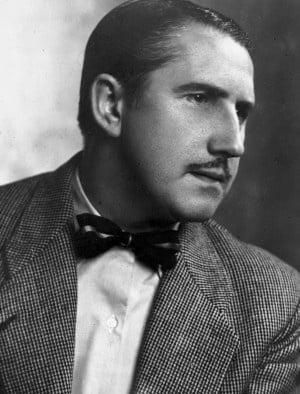
Edgar P. Jacobs
Author – Script – Art
Born in Brussels on March 30, 1904, Edgar Pierre Jacobs initially worked as an opera singer from 1917 to 1940, performing notably at the Lille Opera. At the same time, he pursued a career as an illustrator (creating artwork for advertisements, catalogs, etc.).
In 1942, Jacobs was commissioned to continue Alex Raymond’s *Flash Gordon* for the weekly magazine *Bravo*. The story arrived in black and white; Jacobs colored the pages and used his brush to modestly cover up female figures who were too scantily clad. Due to tensions between the United States and Germany, he had to create "fake" *Flash Gordon* material (five pages) to wrap up the ongoing story. Jacobs was then asked to create a new work inspired by the famous American hero; this resulted in *The U-Ray* (*Le Rayon U*), later published by RTP in 1967.
Jacobs began working with Hergé on January 1, 1944. Having gained recognition in 1943 for his coloring skills, he was entrusted with reworking seven *Tintin* albums, including *The Seven Crystal Balls* and *Prisoners of the Sun*. Then, in 1946, he created the famous *Blake and Mortimer* adventure series for the Belgian edition of *Tintin* magazine; the series continued two years later in the French edition. The first volume, titled *The Secret of the Swordfish* (*Le Secret de l'Espadon*), launched the adventures of his cult heroes Blake and Mortimer—each of whom was inspired by a real-life friend.


Recently viewed Clear


|

|


